
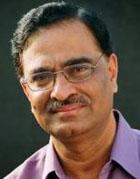
Dr. Shyam Vasudev
Innovation Manager, Healthcare at Philips and
CTO, Forus Health Pvt. Ltd., India
Dr. Shyam holds a doctorate in Real Time Embedded Systems, specialising in Parallel Computer Architecture from Indian Institute of Science (gold Medal) & has been with CG Smith, Ericsson, Tata Consultancy Services and Philips. He was instrumental in devising one of the first hardware based antivirus solution in 90s.
At Tata Consulting Services as Product Manager, Dr. Shyam spearheaded their new product development initiatives, including the product development programs on Wireless Communications and Medical Electronics. He was involved in university relationships for joint research programs with IISc Bangalore & IIT Mumbai and Alborg University in Denmark to work on wireless technology and medical electronics.
During his stint at Ericsson, Dr. Shyam was responsible for building a technical team of 100+ engineers, involved in the execution of their product development activities at Bangalore. While at Ericsson, he was on a special assignment at their head office in Stockholm, as a Strategic Product Manager for over 2 years. This involved building revenues and profits, through innovative and creative business strategies and extensive customer-centric business analysis.
Working as a director of technology in Philips Innovation Campus Bangalore, he established the innovation framework for Consumer Electronics and Medical Systems division. He exponentially grew the patent portfolio of both the above divisions and established working relationships with best know academic institutions. Dr. Shyam's hobbies include listening to Hindustani classical music and Technical reading. He is married to Jyothi who is a sitarist. They have 2 sons, Vishnu and Vasudev.
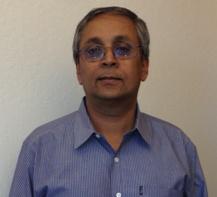
Dr. Mohan Kalkunte
Vice President (Architecture) and Fellow, Broadcom, USA
Mohan Kalkunte is the Vice President of Network Switching Architecture group in Broadcom. As the head of the Architecture group, Mohan is responsible for the development of multiple flagship Ethernet Switching chips that span Small Medium, Enterprise, Data Center and Service provider markets. Mohan has over 25 years of experience in the field of networking and semiconductors.
Mohan is a named inventor of over 100 approved and pending patents. He was elected a Broadcom Fellow in 2009. Mohan is a IEEE Senior Member and has several publications. He holds a Bachelor’s degree in Mechanical Engineering from Bangalore University, India, a Master’s degree from Syracuse University and a Ph.D in Industrial Engineering and Operations Research from The Ohio State University in 1988.
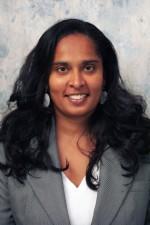
Dr. M. Bernardine Dias
Associate Research Professor, Robotics Institute,
Founder and Director, TechBridgeWorld, Carnegie Mellon University, USA
M. Bernardine Dias is an Associate Research Professor at the Robotics Institute [1] at Carnegie Mellon University [2]. Her primary affiliation is with the Field Robotics Center [3]. She was also formally affiliated with the Computer Science department at Carnegie Mellon Qatar [4] where she still leads several research efforts through the Qri8 Lab [5] which she co-founded and co-directs. She teaches courses at both the undergraduate and graduate levels.
Dias earned her B.A. from Hamilton College [6], Clinton NY, with a dual concentration in Physics and Computer Science and a minor in Women's Studies in 1998, followed by a M.S. (2000) and Ph.D. (2004) in Robotics from Carnegie Mellon University.
Her principal research objective is to explore the different ways in which we can create computing technology to be culturally appropriate and accessible to underserved communities. She founded and directs the TechBridgeWorld [7] research group that enables technology research relevant to, and in partnership with, underserved communities throughout the globe. Dias is also a leading researcher in autonomous team coordination. Her doctoral dissertation developed the "TraderBots" framework for market-based multirobot coordination in dynamic environments. Her current work in this area explores human-robot teams working under dynamic conditions to achieve complex goals.
She also has a strong interest in encouraging women in computing and in science, and is a founding member of, and faculty advisor to grduate women@SCS [8]. Dias also founded and runs a technology consulting company, Diyunu Consulting LLC [9], since October 2012.
Dr. Debabrata Das
Professor, IIIT-Bangalore, India
Dr. Debabrata Das received his Ph.D. degree from the Indian Institute of Technology Kharagpur (IIT Kharagpur). At present he is serving as Professor and Hewlett Packard Chair at IIIT-Bangalore (IIIT-B). Before joining IIIT-B, he had served at G S Sanyal School of Telecommunication at IIT Kharagpur and later at Kirana Networks in New Jersey, USA. At present he is Principal Investigator (PI) of Department of Information Technology, Government of India Sponsored project on Green Broadband Wireless Network. He had been PI of sponsored projects from Hewlett Packard, Motorola Research, Intel and Nokia on areas of IMS and Broadband Wireless MAC/QoS. His areas of teaching interest is, Wireless Access Network, Mobile Computing with IMS and Internetworking. His main areas of research interest are Wireless Access Network's MAC, QoS, Power saving and IP Multimedia Subsystems. Dr. Das has more than 65 peer reviewed papers in different journals and International conferences. He and his wireless network team had contributed three ideas to IEEE 802.16m Broadband Wireless Standard. He is also board member of IT-Service Management Forum India (itSMF), OCAC of Orissa Govt.; and a member of e-Governance committee of Govt. of Karnataka. He was General Chair of IEEE International Conference IMSAA-09. He is TPC CoChair of IEEE CONECCT-2013 and IEEE VITAE of Global Wireless Summit 2013. He has been TPC member of number of international conferences and reviewers of IEEE Journals.

Dr. Rajagopalan Srinivasan
Principal Innovator Biomedical Imaging Resource
Assistant Professor, Dept. of Physiology and Biomedical Imaging,
Mayo Clinic College of Medicine, USA
Dr. Rajagopalan currently heads a multi-disciplinary team of scientists, engineers and clinicians to develop unique clinical frameworks for automatic understanding of medical images and triaging the patients to the most relevant clinical pathway. This paradigm has shown promise in a number of specialties. Most notably the techniques invented, developed and deployed by Dr. Rajagopalan is routinely used in the clinical assessment of lung diseases at Mayo Clinic. Physicians in the departments of Radiology, Pathology and Thoracic diseases regard this capability as heralding an important new advance in the clinical assessment of these complicated diseases. The computational framework developed by his team is poised to become an international standard to non-invasively assess the risk of lung cancer and is expected to drive down the cost of large scale lung cancer screening. The same technology is showing great promise in applications in gastroenterology, orthopedic surgery, neurology and liver and kidney disease. It is not overstated to single out Dr. Rajagopalan as the resident expert at Mayo in quantitative medical image understanding.
Dr. Rajagopalan got his PhD from Mayo Clinic College of Medicine. His dissertation work on tissue engineering is a landmark achievement in marrying mathematics, biomaterials and biology. Dr. Rajagopalan has also made pioneering contributions in image guided neurosurgery through the development of high resolution digital brain atlas that is currently integrated into major image guidance systems. Dr. Rajagopalan has published more than 200 peer reviewed journal and conference publications, filed more than 25 international patents of which 10 have already been issued. An active member of IEEE, MICCAI, Society for Biomaterials, and SPIE, Dr. Rajagopalan has won numerous awards from these societies. He is the first and only Indian till date to have received the prestigious young investigator award conferred by the MICCAI society. Dr. Rajagopalan has also developed around fifteen image understanding applications that are routinely used in clinical care worldwide.
Prior to joining Mayo Clinic, Dr. Rajagopalan has worked for IBM Singapore, Center for Information Enhanced Medicine- a JHU, National University of Singapore joint venture, and General Electric Global research. He has collaborated with scientists from Harvard, Stanford, MIT, Fraunhaufer Institute and Massachusetts General Hospital. Dr. Srinivasan Rajagopalan’s technical contributions spans across parallel computing, high speed imaging, image based metrology, scientific visualization, geometric modeling, multi-dimensional image analysis, fuzzy logic, validation methodologies and pattern recognition. He has successfully deployed his technical skills to further the practice of conventional and interventional radiology, cardiology, neurology, pulmonology, ophthalmology, and tissue engineering.